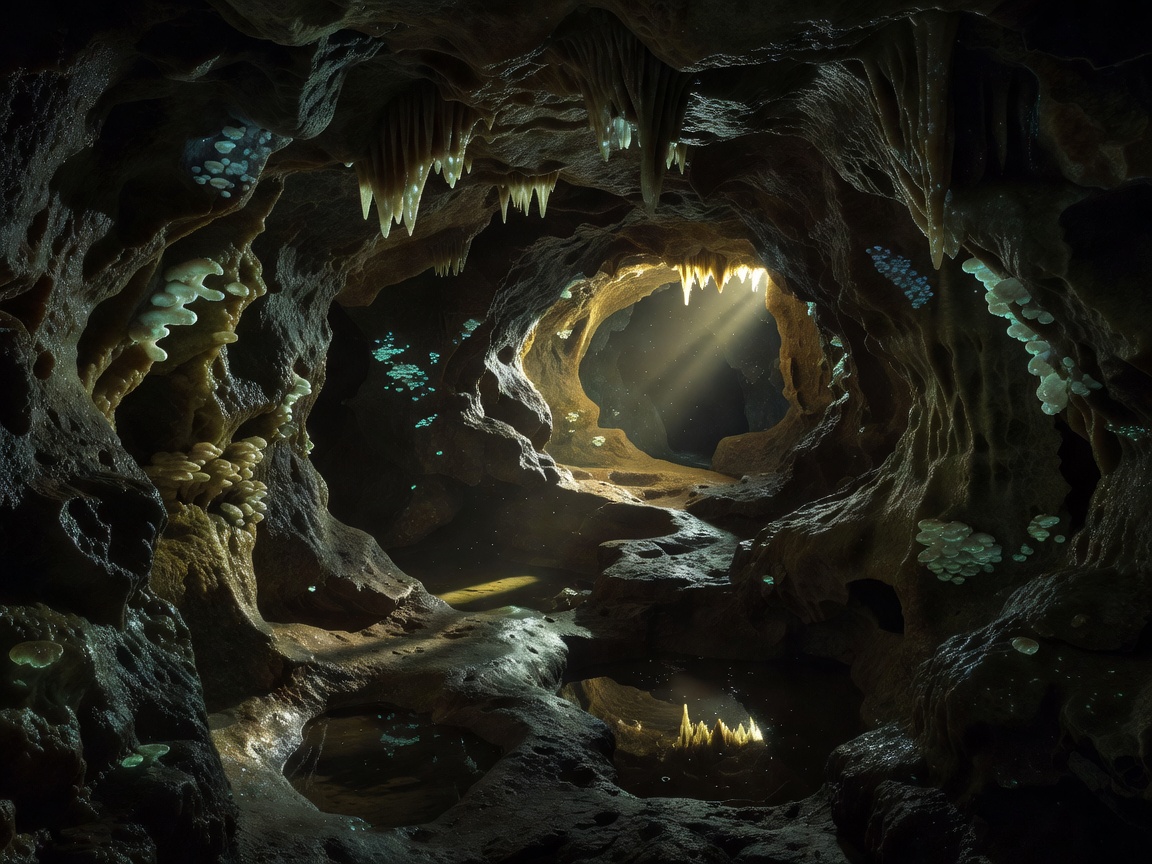
Photographing the thermal caverns beneath the Buda Hills presents a unique technical challenge: balancing extremely low ambient illumination with focused directional LED spotlights installed to protect delicate mineral popcorn and aragonite formations.
Exposure & Sensor Management
Because tripods are often prohibited along narrow footbridges to prevent damage to fragile rock structures, photographers must rely on hand-held techniques with fast wide-angle prime lenses and high ISO thresholds.
| Cave Environment | Recommended Aperture | Shutter Speed Range | ISO Range | White Balance |
|---|---|---|---|---|
| Main Passages (Illuminated LED) | f/2.8 - f/4 | 1/60s - 1/100s | ISO 1600 - 3200 | 3800K (Warm LED) |
| Deep Crystal Cavities (Dim Light) | f/1.4 - f/1.8 | 1/40s - 1/60s | ISO 3200 - 6400 | 3200K (Tungsten) |
| Macro Mineral Formations | f/2.8 | 1/125s (Handheld IBIS) | ISO 1600 | Auto / Custom Target |
Handling High-ISO Sensor Noise & Mixed Lighting
1. In-Body Image Stabilization (IBIS) Technique
Keep your elbows tucked closely against your torso and leverage wall rails or handrests when available to steady the camera for shutter speeds as slow as 1/30s at base aperture settings.
2. Color Temperature Calibration
Underground illumination shifts rapidly between cool floodlights and warm accent lights. Shooting in uncompressed RAW format allows precise post-capture adjustment without degrading subtle mineral hues.
3. Controlling Highlight Clipping
Mineral surfaces reflect direct light highlights easily. Use exposure compensation dial (-0.7 EV to -1.0 EV) to preserve fine crystal textures against deep cavern shadows.
For location details, opening hours, and visitor guidelines for Szemlő-hegyi Cave, see our full Szemlő-hegyi Crystal Cave Directory Guide.