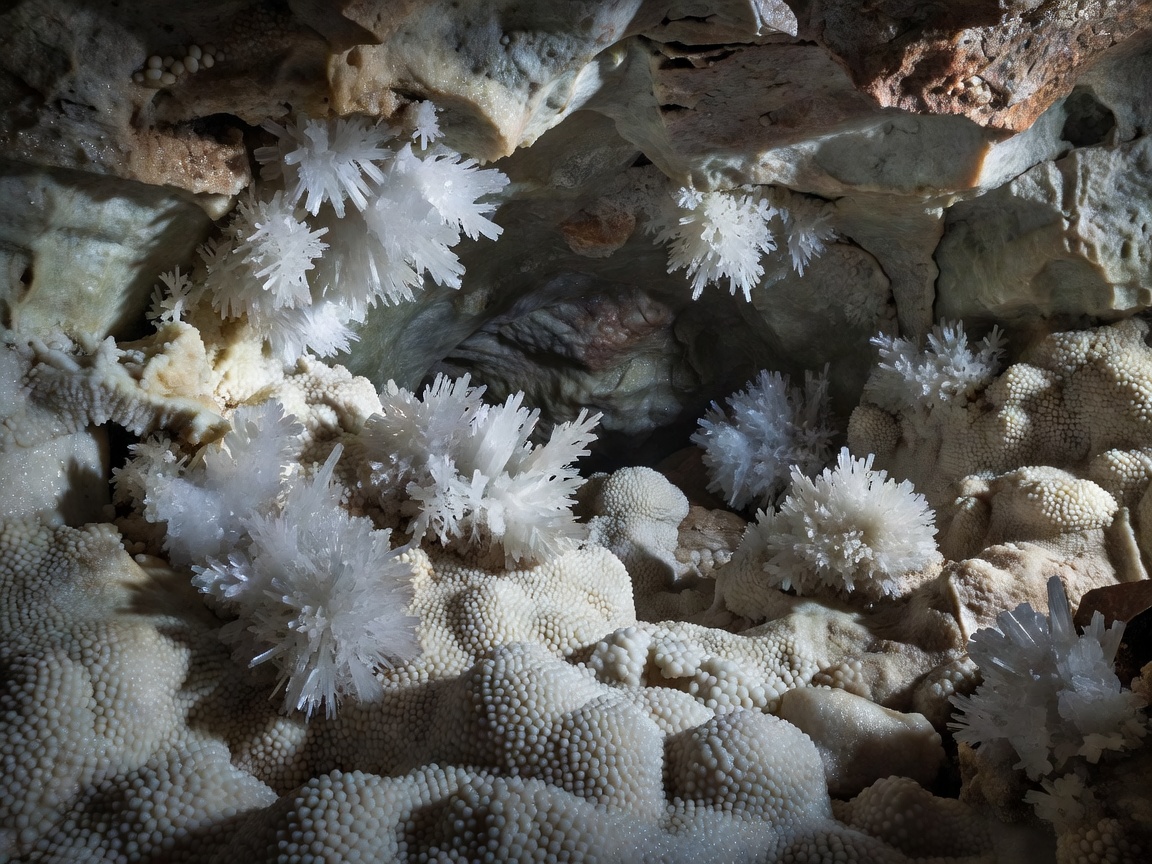
While millions of visitors flock to the Parliament and Buda Castle, an incredible thermal-carved network lies silently underneath the streets of District II. Discovered by quarry workers in 1930, the Szemlő-hegyi cave system is globally renowned for its unique mineral "popcorn" and aragonite rose deposits.
Geological Origin & Micro-Climate
Unlike caves created by surface rainfall runoff, Szemlő-hegyi was dissolved from below by warm, mineral-rich thermal waters bubbling up through limestone cracks millions of years ago. This process produced smooth walls covered in grape-like clusters (cave popcorn) rather than standard stalactites.
The air inside the cave remains at a constant temperature of 12°C (53.6°F) year-round with near 100% humidity. It is completely free of dust and allergens, making it an official therapeutic site for respiratory ailments.
Key Visitor Information
- Location: Pusztaszeri út 35, 1025 Budapest (Bus 29 from Kolosy tér)
- Guided Tour Duration: Approx. 45 minutes along paved, lit walkways
- Official Website: Duna-Ipoly National Park Official Portal
- Recommended Attire: Warm sweater and sturdy walking shoes (12°C ambient temperature)
Photography Recommendations
Lighting inside the cave relies on warm LED displays designed to protect fragile mineral surfaces. For cleanest hand-held photos without tripods, use a fast prime lens (f/1.8 or f/2.8) and set your ISO between 1600 and 3200. Focus closely on the textured mineral ceiling clusters to highlight the depth of the aragonite crystal patterns.